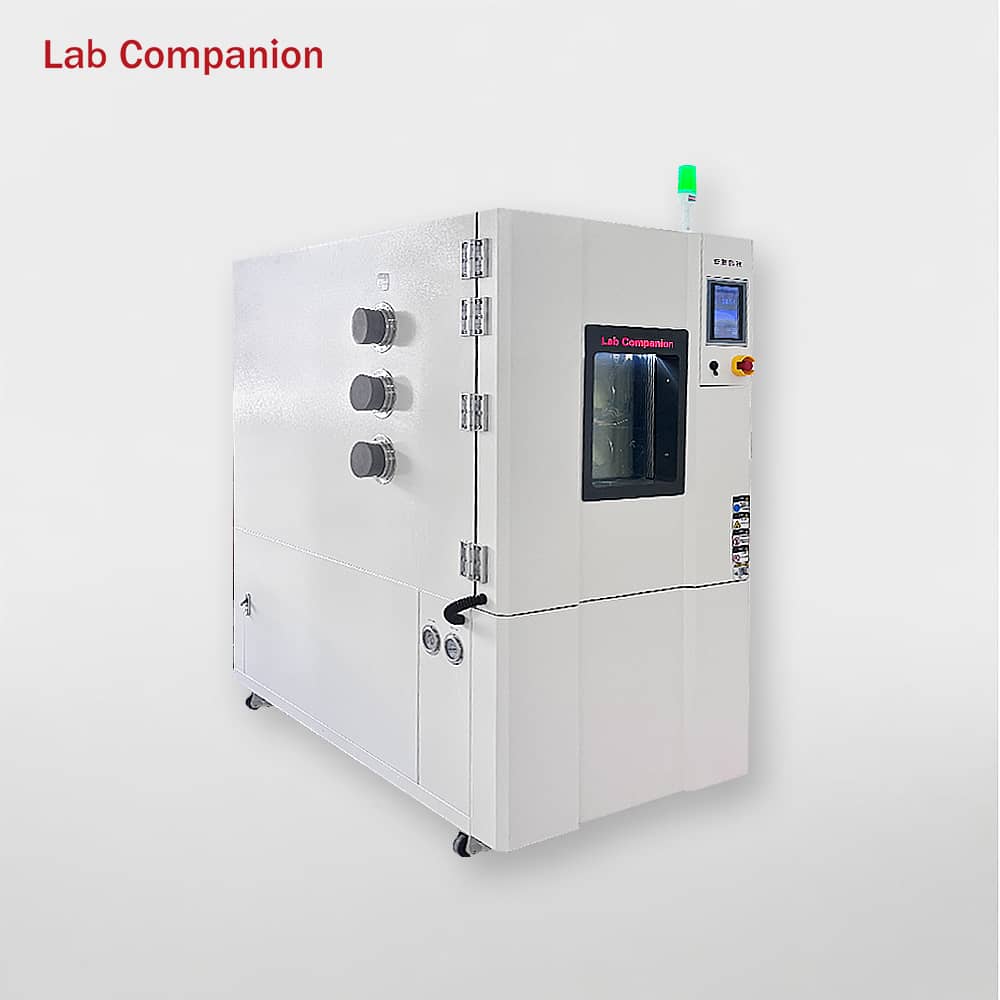
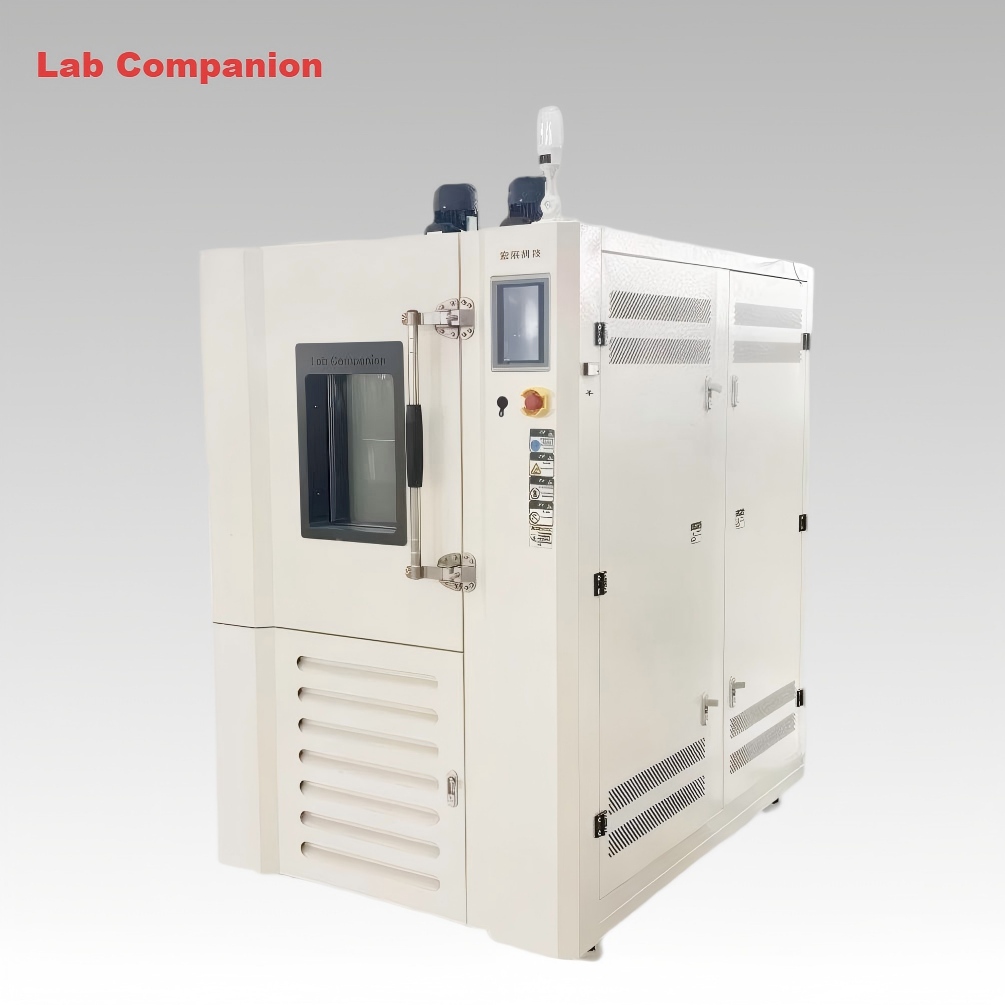
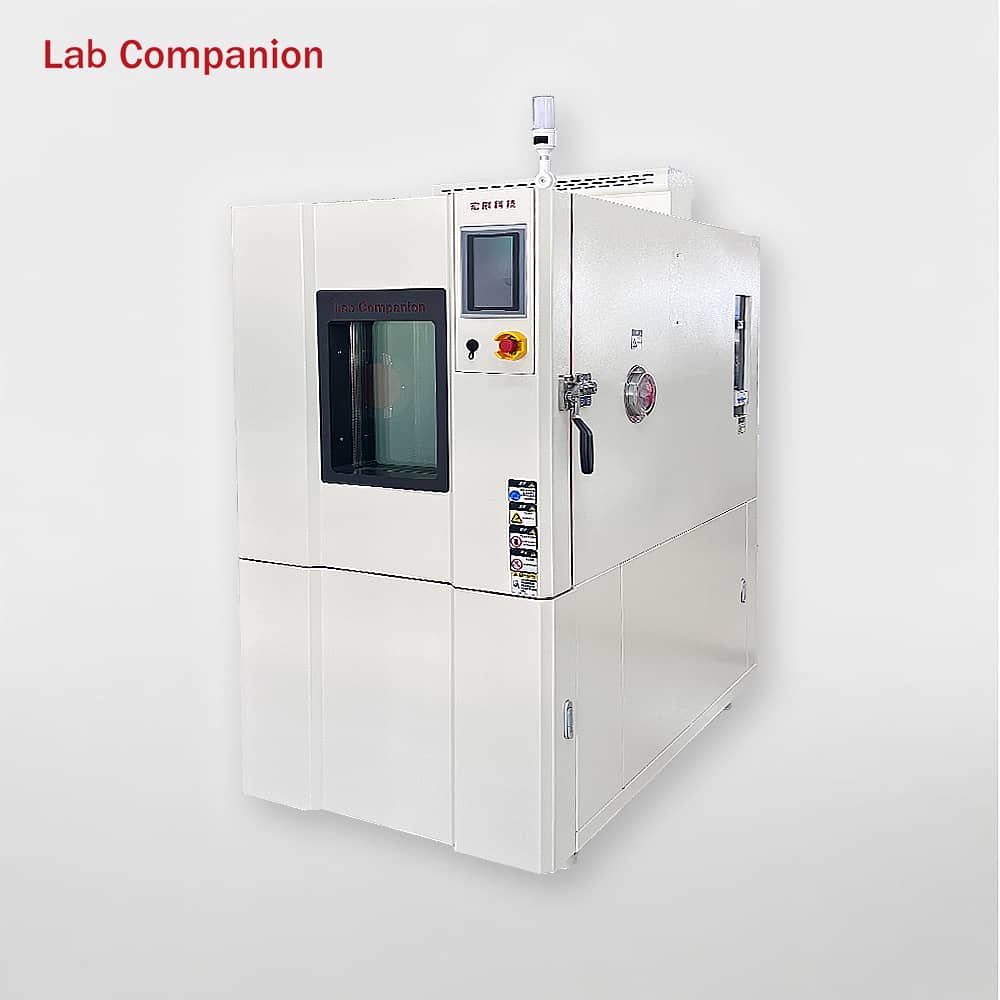
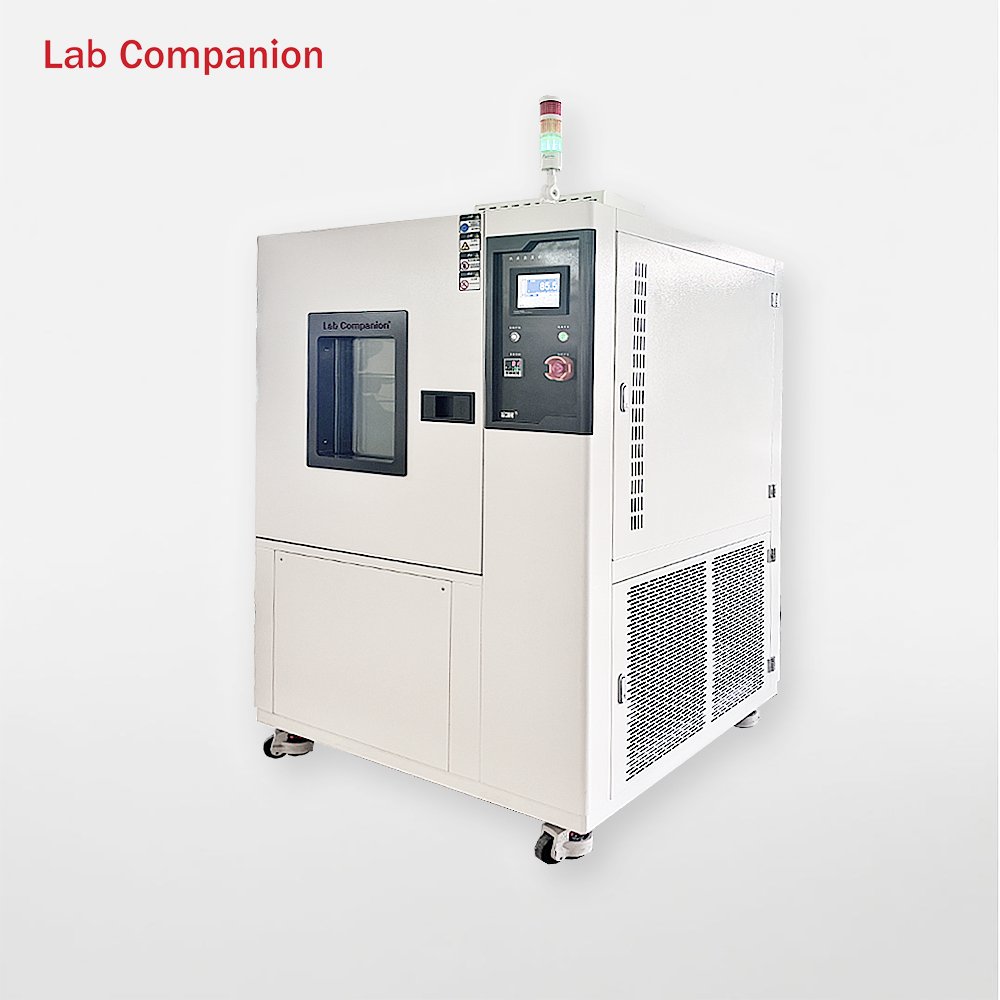
The precise environmental simulation capability of the temperature and humidity test chamber relies on a modular structure design of "chamber base + functional systems + control system". All components work in synergy to achieve accurate regulation and stable maintenance of temperature and humidity. The core structure is divided into the following parts:
I. Chamber Basic Structure: Core of Environmental Bearing
1. Inner Tank: As the core carrier of the test area, it is usually made of SUS 304 stainless steel for excellent corrosion resistance and easy cleaning. The smooth inner wall is equipped with one or two axial fans (quantity depends on test chamber volume), which circulate air inside the chamber to ensure uniform airflow distribution. For some models, the inner tank is treated with anti-condensation technology to prevent water dripping from affecting test results.
2. Outer Shell: Mainly constructed from galvanized steel sheets with electrostatic powder coating, it serves as protection and thermal insulation. The gap between the outer shell and inner tank is filled with dense mineral wool to minimize heat exchange between the inside and outside of the chamber, reducing energy consumption.
3. Chamber Door & Door Seal: The door is fitted with multi-layer heated glass, which allows real-time observation of test status; the heating and defrosting function prevents glass fogging. A silicone door seal is attached to the inner side of the door to ensure airtightness and avoid temperature/humidity leakage.
4. Shelves: Height-adjustable stainless steel shelves are designed for placing test samples. They ensure unobstructed air circulation around samples and do not interfere with internal airflow.
II. Temperature Control System
1. Heating Assembly: Installed near the air duct of the inner tank, it features electric heating tubes as the core component. With high temperature resistance and uniform heat generation, the tubes directly supply heat to the internal air and respond to heating commands from the controller.
2. Refrigeration System: Air conditioning components are integrated into the air handling system at the rear of the test chamber. Circulating air is cooled when passing through a heat exchanger. The condenser is generally air-cooled, with a water-cooled option available.
III. Humidity Control System
A. Humidification Device
l Electrode-type Humidifier: Consists of electrode rods and a humidification water tank (for storing distilled/deionized water). Steam is generated by heating the water when the electrode rods are energized.
B. Dehumidification Device
l Refrigeration Dehumidification Module: Linked with the evaporator, it achieves dehumidification through cooling and condensation.
l Drainage PipeCollects condensed water and discharges it outside the chamber to maintain inner tank dryness.
IV. Operation & Control System
1. Operators can send commands to the Labcompanion controller via the color LCD touchscreen to control the test chamber. Intuitive graphic symbols enable a user-friendly interface, simplifying operation without requiring additional instructions.
2. The Labcompanion controller is a self-monitoring, 32-bit digital measurement and control system specifically designed for test system applications.
Key Features
l Height-adjustable color LCD touchscreen for flexible operation.
l The program memory can store 100 test programs, with a total of up to 1000 program steps, supporting 250 program step cycles and 9999 program cycles.
l Software supports non-voltage input/output switches.
l Integrated temperature and humidity limit monitoring system.
l Connectable to host server systems via RS232-C serial interface or to network systems via TCP/IP.
l Switchable Chinese/English interface.
In summary, the structural design of the test chamber is centered on precision control, stable operation and reliability, with all components corresponding to the temperature/humidity control principles. Understanding the core components facilitates efficient equipment maintenance and troubleshooting.
Environmental Stress Screening (ESS) and Temperature Cycling (TC) are widely used reliability verification methods for electronic products, differing significantly in core principles, stress types, and application scenarios.
ESS is a multi-stress combined screening method. It efficiently identifies potential early-stage defects by applying multiple environmental stresses simultaneously, simulating the synergistic effects of real operating conditions.
TC is a single-stress screening method. It accelerates the exposure of thermal expansion/contraction-related defects through periodic temperature variations.
Key differences are as follows:
1. Stress Types & Defect Coverage
l TC: Only applies temperature cycling stress (e.g., -55°C to +125°C). Thermal stress induced by differential material expansion/contraction detects defects directly linked to thermal matching, including solder joint fatigue, poor chip bonding, package cracks, and multi-layer dielectric splitting.
l ESS: Adopts a multi-stress superimposition strategy, synchronously applying temperature cycling, random vibration, and electrical stress (e.g., dynamic voltage switching). This coupling effect effectively exposes complex failure modes such as structural loosening, poor connector contact, microcrack propagation, and intermittent conduction failure, especially intermittent faults hard to replicate under single-stress conditions.
2. Equipment Investment & Cost
l TC: Requires only temperature test chambers, with low procurement costs, standardized operation, easy maintenance, minimal energy/labor consumption, and suitability for large-scale mass production deployment.
l ESS: Demands an integrated test platform comprising temperature control systems, vibration tables, electrical stress loading modules, and high-precision monitoring systems. Initial investment typically exceeds RMB 1 million, with high-end configurations costing several million yuan. It imposes strict requirements on site, power supply, cooling systems, and technician expertise, leading to substantially higher operational costs.
3. Application Scenarios & Industry Requirements
l TC: A routine screening method widely used in consumer electronics and industrial control equipment—fields sensitive to cost or with conventional reliability needs.
l ESS: Boasting a high defect detection rate (60%–80% for intermittent faults), it is mandated by industry standards for high-reliability sectors including aerospace, automotive electronics, military equipment, and medical devices to ensure critical system functionality.
4. Screening Effectiveness
l Studies indicate TC screens 75%–85% of defects, random vibration screens 15%–25%, while their combination (core of ESS) achieves a detection rate of up to 90%.
l ESS’s multi-stress coupling better simulates real-world comprehensive stresses, enabling more thorough elimination of early-stage failures.
5. Lab Companion ESS & TC Test Chambers - Guangdong Lab Companion Co., Ltd.
High efficiency guarantees quality, maximizing reliability assurance.
Lab Companion ESS series complies with universal climatic test standards, offering chamber volumes from 270L to 1300L and a temperature range of -70°C to +180°C, meeting diverse customer needs. Optimal temperature change rates: 5K/min, 10K/min, 15K/min.
Your product functionality remains intact throughout production, R&D, and quality assurance. Leave reliability testing to us.
Temperature cycling test chambers are core equipment for product reliability verification, with adaptability directly affecting product performance and service life. Industry-specific application scenarios and testing standards vary greatly, making standard equipment unable to meet refined needs. With 20 years of industry expertise, LABCOMPANION has developed customized temperature cycling test solutions targeting pain points in three core sectors—automotive components, medical devices, electronic & electrical products—relying on precise temperature control technology to become a trusted partner for enterprises.
I. Automotive Components Industry: Solving Outdoor Condition Simulation & Batch Testing Issues
Automotive components must withstand extreme outdoor temperature and humidity, with the weather resistance of sensors, connectors and other core parts critical to driving safety. Key pain points: insufficient temperature range of standard equipment for simulating full working conditions (-30℃ cold start, 70℃ high-temperature exposure); low batch testing efficiency causing production bottlenecks; strict industry standards requiring traceable, repeatable test data.
LABCOMPANION’s customized rapid temperature cycling test chambers offer targeted solutions: -40℃~85℃ temperature range for full-scenario testing, ±0.3℃ control accuracy and ≤±0.5℃ fluctuation to ensure uniform temperature field; programmable LED controller supporting over 200 preset programs to boost batch efficiency; intelligent data acquisition system for real-time recording and compliant report generation, meeting quality traceability needs. This solution serves leading automotive component enterprises, testing brake system sensors and control modules to identify potential defects, ensuring stable operation under harsh conditions and compliance with industry standards.
II. Medical Device Industry: Adapting to Sterility & Precision Temperature Control for Compliance Testing
Medical devices are directly linked to patient safety, requiring reliability testing to balance precision temperature control and sterile cleanliness. Core pain points: precise temperature control for drying syringes, catheters and other consumables to avoid material damage; high-humidity simulation for monitors in hospital environments; compliance with ISO 13485 and other standards for market access.
LABCOMPANION provides an integrated solution of temperature-humidity chambers and precision ovens. Precision ovens with 304 stainless steel sealed inner chambers offer ±0.3℃ accuracy, 60℃-120℃ drying range to protect consumables; temperature-humidity chambers simulate 55℃+95%RH environment, with CE and ISO9001 certifications for data compliance; customizable large-capacity chambers support full-scale testing of large medical devices. Widely used in manufacturing and pharmaceutical distribution, it ensures sterility and compliance in production, and verifies cold chain packaging reliability in distribution.
III. Electronic & Electrical Industry: Addressing High-Precision Aging Testing for PCBs & Components
The service life of electronic & electrical products (PCBs, capacitors, resistors) depends on thermal stability. Key pain points: precise temperature control for PCB drying to remove solder paste moisture and prevent cold soldering; uniform temperature field for component high-temperature aging; adjustable multi-temperature zones for research to ensure data repeatability.
LABCOMPANION’s combined solution of precision ovens and temperature cycling chambers meets diverse needs: precision ovens with convection heating system (≤2℃ uniformity, ±0.3℃ accuracy) for 100℃ PCB drying; temperature cycling chambers (-40℃~85℃) with programmable cycles for component aging; research-grade equipment (40℃-200℃, 98% data repeatability) for academic institutions. It reduces cold soldering rates in production and supports electronic material research in academia.
IV. Full-Process Service Support: End-to-End Assurance from Requirement to Implementation
LABCOMPANION’s core competitiveness lies in both tailored products and full-process support. Professional teams conduct on-site assessments to design solutions, with post-delivery installation, commissioning and training. 16 national service centers, with the Dongguan headquarters covering the Pearl River Delta, offer 2-hour response, on-site support within 3 days and 1-year full equipment warranty.
From automotive component condition simulation to medical device compliance testing and electronic product aging verification, LABCOMPANION resolves industry pain points with customized technologies. Backed by 20 years of experience and authoritative certifications, it continues to provide reliable testing support for core industries, helping enterprises improve product quality and safety.
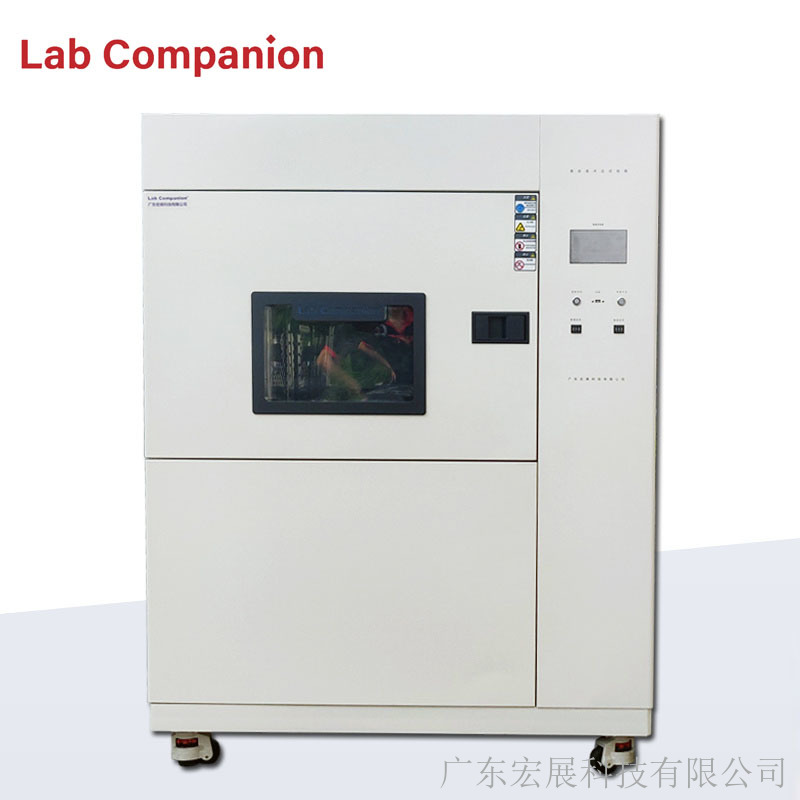
The stable operation of Guangdong LabCompanion TS2 (two-chamber type) and TS3 (three-chamber type) series thermal shock test chambers relies on standardized maintenance. Combining the structural commonalities of the two equipment series and the differences such as the exclusive damper assembly of TS3, this document sorts out the core maintenance essentials and provides practical operation guidelines.
I. Daily Maintenance: Mandatory Items After Daily/Each Test
Applicable to both series, the core of daily maintenance is to identify basic hazards, which shall be completed after daily/each test as follows:
1. Cleaning and Environment Arrangement: Cut off the power after the test; wait for the chamber to return to normal temperature, then wipe the inner tank (SUS304 material) and outer shell with a dry soft cloth; ensure the ventilation and heat dissipation ports are unobstructed, reserve a heat dissipation space of ≥30cm around the equipment, and avoid debris accumulation.
2. Basic Status Check: Inspect that the door sealing gasket is intact and undamaged; confirm that the sample rack/basket (TS2) and test rack (TS3) are free of looseness and deformation, and the pneumatic moving mechanism of TS2 operates smoothly; check that the line connections are firm and undamaged, and the refrigeration pipeline has no abnormal frosting or leakage traces.
3. Preliminary Consumable Inspection: Check if the air filter is clogged, and promptly blow it clean with compressed air or rinse it with clean water and dry it; additionally clean the observation window glass for TS3 to ensure clear visibility.
II. Regular Maintenance: Cycle-Based Precise Maintenance (Summary in Table)
Maintenance Cycle
Core Items
Differences Between TS2/TS3
Weekly
1. Clean the air filter (replace every 3 months); 2. Clean the heat sink of the refrigeration condenser; 3. Check the operation status of core mechanisms
TS2: Check that the air pressure of the pneumatic moving mechanism is stable without abnormal noise; TS3: Check that the damper assembly switches smoothly and the gasket does not fall off
Monthly
1. Check that the terminals of the heating element are firm and free of oxidation; 2. Test over-temperature, overload, leakage and other protection functions; 3. Check the status of transmission/ventilation components
TS2: Check the lubrication of the basket guide rail; apply high-temperature grease if stuck; TS3: Check that the circulating fan has no abnormal noise and clean the dust on the blades
Quarterly
1. Professionally inspect the refrigeration system and test the refrigerant pressure; 2. Check the lubricating oil level of the compressor; 3. Calibrate the temperature control accuracy; 4. Inspect the sealing components
TS3: Disassemble and inspect the gasket of the damper assembly; replace it promptly if aged or worn
III. Special Maintenance for Core Components
1. Refrigeration System Maintenance (Common to TS2 and TS3): Avoid frequent start-stop of the refrigeration system (wait for ≥5 minutes after shutdown before restarting); run for 30 minutes every month during long-term shutdown to prevent compressor seizure; regularly check pipeline joints for leakage with soapy water, and prohibit starting the compressor without sufficient refrigerant.
2. Control System Maintenance (Common to TS2 and TS3): Clean the control panel to prevent liquid ingress; check that the PLC/sensor wiring is firm and clean the probe; back up test programs regularly, and verify the connection of remote communication lines (if any).
3. Exclusive Mechanism Maintenance (Differences): TS2: Maintain the pneumatic moving mechanism, check that the cylinder/solenoid valve has no air leakage, and inspect the drive motor windings annually for insulation; TS3: Check the air pressure of the damper drive cylinder every six months, clean the guide rail and apply lubricating grease, and replace aged seals.
IV. Fault Prevention and Emergency Handling
1. Prevention Points: Do not overload the equipment; samples shall be dry and non-corrosive; avoid long-term continuous operation at extreme temperatures; cut off the power, prevent dust and keep the environment dry and ventilated during long-term shutdown.
2. Emergency Principles: Immediately press the emergency stop button and cut off the power in case of abnormality; do not force restart; simply check the filter/condenser/sealing gasket; contact the official LabCompanion after-sales service if the problem cannot be solved, and prohibit non-professional personnel from disassembling core components.
V. Maintenance Records and Notes
Establish a maintenance ledger to record the date, items, problems and handling results; must cut off the power to prevent electric shock during maintenance; use compliant consumables, and contact the official for inspection and calibration annually to ensure compliance with national and military standards.
Summary: The core of maintenance for both equipment is "daily hazard prevention, regular core maintenance, and exclusive differentiation". Standardized operation can ensure stable operation, accurate testing, extend service life and reduce operation and maintenance costs.
With the accelerated iteration of the consumer electronics industry, the requirements for the efficiency and accuracy of reliability testing have been upgraded. Guangdong Lab Companion's Rapid Temperature Change Test Chamber, positioned as a dedicated equipment for accelerated life testing, shortens the cycle with ultra-high heating and cooling rates and ensures screening effectiveness through precise temperature control. It is highly adaptable to industry needs, helping enterprises quickly complete quality verification and seize market opportunities.
I. Core Efficiency Advantage: 10℃/min Rate, Reducing Test Cycle by 50%
Centered on efficient accelerated testing, the equipment breaks through the efficiency bottleneck of traditional equipment and matches the rapid iteration rhythm of the industry:
l Ultra-high heating and cooling rate (10℃/min): Adopting the coordinated design of cascade refrigeration system and high-efficiency heating tube, it can quickly switch from -40℃ to 85℃, reducing the test cycle by 50% compared with traditional equipment (1-3℃/min). For example, the mobile phone motherboard test is shortened from 48 hours to 24 hours;
l Adapting to iteration needs: Assists multiple rounds of rapid verification in the R&D stage and mass screening in the mass production stage to avoid market launch delays;
l Wide temperature range coverage (-70℃~150℃): Simulates different climate scenarios around the world without the need to replace equipment, improving test efficiency.
II. Precision Control Advantage: Stable Temperature Change for Efficient Defect Screening
l While ensuring high efficiency, it achieves precision through refined design to guarantee stable temperature change and accurate screening:
High-precision temperature control: PID closed-loop control + platinum resistance sensor, temperature fluctuation ≤±0.5℃ without overshoot, accurately exposing potential defects such as loose solder joints;
l Uniform temperature field: Optimized air duct and fan design, temperature uniformity ≤±2℃, ensuring consistent and comparable mass test data;
l Multiple safety protections: Over-temperature, over-voltage, leakage protection, etc., avoiding equipment failures and sample damage, ensuring continuous and safe testing.
III. Industry Case: 30% Reduction in Defect Rate
A leading mobile phone manufacturer introduced the equipment for testing core components, achieving remarkable results: In the R&D stage, it completed the temperature change test that traditionally takes 60 days in only 30 days, quickly identifying and optimizing display defects; In the mass production stage, it accurately screened defective components, reducing the final product defect rate by 30% and improving test efficiency by 50%, greatly lowering after-sales costs and brand risks.
IV. Summary of Core Value
Guangdong Lab Companion's Rapid Temperature Change Test Chamber takes 10℃/min rate as the core of efficiency and precise temperature control + uniform temperature field as the guarantee for screening, adapting to the iteration and high-quality requirements of consumer electronics. By reducing the test cycle by 50% and the defect rate by 30%, it provides core support for enterprises in R&D acceleration, cost control and quality improvement, and is a reliable partner for enterprises to enhance competitiveness.
1. There are significant differences in test standards across industries (e.g., ISO, GJB, FDA). Can the equipment directly meet multi-standard compatibility without manual parameter adjustment?
Answer: The core pain point is that standard adaptability affects certification applications. Hongzhan is built with a library of over 200 industry standard programs (including ISO 16750 for electronics, GJB 150, FDA 820 for medical devices, etc.), which can be matched with requirements with one click without manual programming. The data format complies with certification specifications, facilitating rapid approval.
2. When testing special-shaped samples (such as long strip components, irregular assemblies), can the equipment's inner tank layout and door opening method be adapted to avoid blocking the air duct and affecting test results?
Answer: Conventional equipment mostly has fixed inner tanks and front-opening doors, which are difficult to adapt to special-shaped/large samples. Hongzhan supports customization of inner tank sizes from 36L to 10000L, and can design zoned air ducts and reserve sample wire outlets. Door opening methods can be front-opening, side-opening, or double-opening (suitable for extra-long samples), ensuring temperature uniformity during testing of special-shaped samples without affecting data.
3. Can existing laboratory equipment such as data loggers, vibration tables, and salt spray chambers be linked and controlled with high and low temperature test chambers to achieve comprehensive testing of temperature and humidity + vibration + salt spray?
Answer: Equipment synergy compatibility is easily overlooked. Hongzhan equipment is equipped with standardized interfaces (RS485, Ethernet) and can be seamlessly connected with third-party instruments. Through the central control system, it can synchronously control multiple environmental factors such as temperature and humidity, vibration, and salt spray, with real-time data synchronization and integration, adapting to complex reliability testing needs in aerospace, new energy and other industries.
4. When testing flammable, corrosive, or volatile gas-containing samples, does the equipment have special protective designs to avoid safety hazards or equipment damage?
Answer: The impact of sample characteristics on equipment is easily overlooked. Hongzhan can customize special protective models: explosion-proof inner tanks and inert gas replacement systems for flammable samples; Hastelloy inner tanks (acid and alkali resistant) for corrosive samples; activated carbon filtration devices for volatile samples, ensuring safety and extending equipment service life.
5. Can the equipment be compatible with unstable laboratory voltage (such as voltage fluctuations during peak workshop electricity usage) or special power supply requirements (such as 110V voltage overseas) to avoid frequent shutdowns or component burnout?
Answer: Power supply compatibility is easily overlooked. Hongzhan equipment supports a wide voltage range of 110V-440V, adapting to domestic and foreign power supply standards. It has a built-in intelligent voltage stabilization module and can operate stably even with a voltage fluctuation of ±15%. Equipped with triple protection against overload, overvoltage, and undervoltage, it avoids equipment damage or test interruption caused by power supply issues.
Core Logic: Match testing requirements, balance performance and full life-cycle cost, and avoid over-specification for under-utilization.
I. Core Testing Requirements
1. Temperature Change Rate
Clarify the loaded rate and deviation requirements (e.g., ≤±0.5℃/min), and match the application scenarios:
l 5–10℃/min for consumer electronics
l 10–20℃/min for automotive/aerospace industries
2. Temperature & Humidity Range
Cover the specified testing standards:
l -40~85℃ for new energy products
l -55~125℃ for aerospace products
Select models with 20%–98%RH range if humidity testing is required.
3. Sample Compatibility
l The chamber volume should be ≥ 3 times the sample volume.
l Dynamic load compensation is required for high-heat-capacity samples (e.g., metal components).
II. Hardware Performance
1. Refrigeration System
Prioritize dual-compressor cascade systems equipped with imported brands (Danfoss/Copeland) and eco-friendly refrigerants (R404A/R23).
2. Air Duct & Heating System
Adopt scroll diversion + baffle design, with 0–100% linear adjustment of heating tubes.
3. Sensors
Use imported PT1000 sensors with a sampling frequency of ≥ 10 times/second.
III. Software Functions
1. Algorithm
PID closed-loop control + adaptive temperature zone compensation, supporting custom rate curve setting.
2. Data Management
Automatic data recording and export (Excel/CSV format), with support for remote control and multi-channel alarm.
3. Safety Features
Over-temperature protection, compressor overload protection, water shortage protection, etc. Explosion-proof pressure relief devices are mandatory for flammable and explosive samples.
IV. Full Life-Cycle Cost
1. Procurement Cost
Select models based on actual needs; avoid blind pursuit of high rates (the price of 10℃/min models is 1.5–2 times that of 5℃/min models).
2. Operation Cost
Prefer inverter compressors to reduce electricity consumption by 15%–20%.
3. Maintenance Cost
Choose models with modular structure, and confirm annual free calibration services.
V. Expandability & Compatibility
Support post-purchase installation of humidity, explosion-proof, and data acquisition modules.
Compatible with upper computers and testing fixtures for automated testing.
VI. Manufacturer Services & Qualifications
Provide customized solutions and loaded rate test reports.
Ensure the equipment has passed ISO 9001 and CE certifications, complying with the GB/T 2423.22 standard.
Ø Selection Case
Testing Scenario: Automotive motor controller testing (8kg, AEC-Q100 standard)
Recommended Model: 150L chamber with 10℃/min loaded rate, -40~125℃ temperature range, and explosion-proof function.
Benefits: Balances testing requirements and cost, improving testing efficiency by 4 times.
As a core environmental reliability testing equipment, the high-temperature test chamber evaluates the durability, stability and service life of materials, components and complete machines under high temperatures by simulating extreme environments. It is key to product R&D, quality inspection and certification. Its core value lies in replacing natural aging with controlled laboratory conditions, shortening test cycles, identifying potential defects accurately, and providing a scientific basis for quality optimization. Below is an analysis of its core features and main applications from a professional perspective.
I. Core Technical Features
The technical advantages of the high-temperature test chamber focus on three aspects: temperature control accuracy, environmental simulation authenticity and safety reliability, specifically as follows:
1. Precise Temperature Control and Uniformity: Adopting PID microcomputer automatic control algorithm with high-precision platinum resistance sensor, the temperature control accuracy reaches ±0.5℃, and the no-load internal temperature uniformity is within ±1.0℃. The forced air circulation system (high-temperature resistant motor + multi-wing wind wheel) enables rapid heat diffusion, avoiding local temperature differences affecting test results.
2. Efficient Heating and Energy-Saving Insulation: Equipped with honeycomb stainless steel heating tubes for fast heating, high thermal stability and long service life. The chamber uses SUS#304 stainless steel inner lining and high-density imported rock wool insulation, combined with heat-resistant and corrosion-resistant silicone seals, effectively reducing heat loss, lowering energy consumption and ensuring high-temperature stability.
3. Intelligent Operation and Data Traceability: Supports custom temperature curves for complex processes such as step heating and constant temperature maintenance. High-end models integrate multi-parameter monitoring modules to synchronize temperature and voltage data; some are equipped with image recognition systems for automatic sample aging analysis, reducing human error.
4. Comprehensive Safety Protection: Built-in over-temperature protection, overload power-off and electric heating over-current protection. It automatically cuts off heating power and alarms when temperature exceeds the set range, with explosion-proof door locks and other structural designs ensuring test safety and reliability.
II. Main Application Fields
The high-temperature test chamber is widely used in high-end manufacturing and scientific research fields such as electronics, automotive and aerospace, mainly serving product reliability verification needs:
1. Electronic and Electrical Industry: Used for high-temperature aging testing of chips, capacitors and resistors to evaluate performance attenuation. Conducts high-temperature operation tests on PCBs, mobile phones and servers to verify functional stability under extreme temperatures and troubleshoot loose welds and short circuits.
2. Automotive Industry: Simulates summer in-vehicle high temperatures for durability testing of on-board electronics (control units, sensors, displays) in engine compartments. Tests heat resistance and weather resistance of automotive interior materials and external coatings to ensure vehicle reliability in extreme climates.
3. Aerospace and Military Industry: Simulates high-altitude aerodynamic heating or ground high temperatures to test the high-temperature stability of aircraft components, electronics and spacecraft thermal insulation materials. Verifies military equipment reliability under extreme high temperatures per national military standards, avoiding high-temperature-induced structural cracking and performance failure.
4. New Energy and Photovoltaic Field: Performs high-temperature charge-discharge and storage safety tests on lithium battery modules and solar inverters. Simulates desert high temperatures per IEC 61215 to evaluate solar panel efficiency attenuation and ensure long-term outdoor stability.
5. Pharmaceutical and Material Research: Tests the stability and degradation rate of drugs and vaccines under high temperatures to determine transportation and storage shelf life. Evaluates high-temperature performance of new plastics, composites and architectural coatings, analyzing thermal stability and strength changes to support material selection and R&D.
III. Summary
With precise environmental simulation and comprehensive reliability verification capabilities, the high-temperature test chamber is a core component of modern industrial quality control systems. Its development trend is towards multi-environment collaborative simulation (high temperature + humidity + vibration) and intelligent data analysis, which will further improve test efficiency and accuracy, providing stronger support for high-end product R&D and quality assurance across industries.
As a "quality gatekeeper" in industrial manufacturing and R&D, environmental test chambers simulate extreme conditions (high/low temperature, damp heat, salt spray, etc.) to pre-expose product defects and verify reliability, acting as the hidden "ultimate examiner" in labs.
Core Value: Preempting Potential Failures
Products face diverse harsh environments in real use: Antarctic mobile phones endure -40℃ cold, coastal auto parts resist salt spray corrosion, and aerospace components withstand drastic temperature-humidity fluctuations. Post-market exposure of environmental adaptability issues triggers safety risks, massive economic losses, and brand damage.
The chamber’s core role is to artificially replicate extreme environments or accelerated stresses in labs, condensing years of natural environmental testing into days/hours. It proactively identifies material aging, structural deformation, and performance degradation, providing data for R&D optimization and quality control.
Mainstream Types: Targeted Testing for Scenarios
Environmental test chambers are not one-size-fits-all; different types match specific testing needs:
High/Low Temperature Test Chamber: The basic type, simulating -70℃ to 150℃ (extended ranges for special models) to test product stability under temperature shocks, e.g., chip startup performance and plastic part thermal deformation.
Temperature Humidity Test Chamber: Adds 30%RH-98%RH humidity control to high/low temperature functions, simulating plum rain or tropical environments to assess moisture/mildew resistance, such as appliance casing rust-proofing and textile color fastness.
Salt Spray Test Chamber: Sprays neutral/acidic salt spray to simulate marine/industrial corrosion, testing metal and coating corrosion resistance for automotive, marine, and hardware industries.
Comprehensive Environmental Test Chamber: Integrates temperature, humidity, vibration, and light to replicate complex scenarios (e.g., aerospace launch/operation environments), serving as core equipment for high-end R&D.
Procurement & Usage: Key to Avoiding Risks
Demand Matching: Avoid over-pursuing ultra-wide ranges; define temperature/humidity limits and accuracy based on standards (IEC, GB, MIL-STD). For example, consumer electronics do not require military-grade wide-temperature equipment to prevent resource waste.
Core Performance Focus: Prioritize temperature uniformity, temp-humidity fluctuation (control accuracy), and temperature rise/fall rate (test efficiency), as these directly affect data reliability. Safety features (over-temperature alarm, water shortage protection) are also non-negligible.
Industry Trends: Intelligent & Green Upgrades
Driven by Industry 4.0, chambers are evolving toward intelligence: IoT modules enable remote monitoring and data traceability, while AI optimizes test parameters to cut manual intervention. Greenization is another direction—advanced refrigeration systems and insulation materials reduce energy consumption, aligning with green manufacturing concepts.
From consumer electronics and aerospace to automotive and medical devices, environmental test chambers underpin product reliability, laying a foundation for enterprise R&D and innovation. In the "quality-first" era, their value as the "ultimate examiner" will grow increasingly prominent.
In high-end manufacturing fields (aerospace, automotive electronics, consumer electronics, etc.), a product's ability to adapt to extreme temperature fluctuations directly determines its service life and safety. As core equipment for simulating environmental stress, the rapid temperature change test chamber becomes an "essential tool" in product reliability testing, relying on its advantages of "fast temperature rise/fall + precise temperature control."
1. Core Features: Speed & Precision Advantages
Fast temperature change rate: Conventional equipment reaches 1-3℃/min, while professional models can achieve 5-20℃/min (some special types exceed 30℃/min). It simulates extreme temperature cycles (-70℃ to 150℃) in a short time, greatly reducing test cycles.
High temperature field stability: Adopts multi-zone heating and vortex air flow control; internal temperature uniformity is controlled within ±2℃, avoiding test errors from local temperature differences and ensuring reliable data.
Intelligent control: Equipped with smart systems supporting custom temperature curve programming (presets over 100 test programs). Real-time data collection and curve display help engineers track the test process and improve efficiency.
2. Typical Applications: Industry-Specific Scenarios
Core value: Expose potential product defects under temperature cycles. Key application fields include:
Electronics Industry: Tests mobile phones, chips, circuit boards, etc. Detects issues like solder joint detachment and component aging to avoid malfunctions (crashing, short circuits) during use.
Automotive Field: Verifies on-board radar, battery packs, sensors. Simulates -40℃ to 85℃ cycles to ensure adaptability to extreme cold and heat.
Aerospace: Simulates space temperature stress for satellite components and aviation instruments, ensuring normal operation at high altitudes with severe temperature changes.
3. Key Usage Notes: Ensure Test Quality
Standard sample placement: Distribute samples evenly to avoid blocking air ducts; keep a ≥5cm distance from the chamber wall to prevent local temperature interference.
Regular maintenance & calibration: Inspect vulnerable components (sealing strips, heaters, sensors) regularly; conduct temperature accuracy calibration at least once a year to maintain optimal performance.
As the "gatekeeper" of product reliability testing, its performance directly affects quality judgment. Select industry-suitable equipment and standardize operations to make each test a reliable "touchstone" for product quality.
As a core device for environmental reliability testing, the rapid temperature change test chamber is widely used in electronics, automotive, and other industries due to its ability to achieve drastic temperature variations. Its high/low temperature performance and rapid temperature change capability directly affect test data accuracy, operational safety, and equipment service life. Below are the core operational precautions:
I. Pre-Startup: Conduct Basic Inspections
Comprehensive pre-startup checks are critical for preventing malfunctions, focusing on "medium, status, and connections":
Medium & Pipeline Inspection: Verify that the cooling system's liquid level and pressure meet standards, with no pipeline leakage or blockage. Check the refrigerant system pressure to avoid cooling failure or compressor damage due to insufficient medium.
Equipment Status Confirmation: Ensure the chamber door seal is intact (poor sealing reduces temperature change rate and increases energy consumption). Keep the chamber interior clean and free of debris, and ensure sensor surfaces are free of oil and dust to avoid temperature measurement interference.
Electrical Connection Check: Confirm power and control cables are securely connected, and the grounding resistance complies with specifications (≤4Ω) to prevent electric leakage or electromagnetic interference.
II. Sample Placement: Prioritize Scientific Standards
Proper sample placement ensures test authenticity, adhering to the principles of "no interference, no overrun, easy monitoring":
Weight & Volume Control: Total sample weight must not exceed the rated load. Single sample volume ≤ 1/3 of the working chamber. Maintain a distance of ≥5cm from the chamber walls and sensors to avoid uneven local temperature caused by airflow blockage.
Sample Compatibility: Never place flammable, explosive, corrosive, or toxic samples. For heat-generating samples, specify power in advance to ensure compatibility with the equipment's heat dissipation capacity and prevent overload.
Fixing & Wiring Specifications: Secure samples with dedicated brackets to prevent displacement during temperature changes. Use high-temperature resistant insulated wires for energized tests to avoid short circuits and aging.
III. Operation Process: Precise Monitoring & Adjustment
Dynamic monitoring during operation guarantees test reliability, focusing on "parameters, status, and abnormalities":
Parameter Setting & Verification: Set temperature range, change rate, and other parameters per standards and re-verify. Adjust only after the equipment stabilizes to avoid system fluctuations.
Operation Status Monitoring: Real-time monitor temperature curves and indicator lights to ensure the deviation between actual and set temperatures ≤ ±1℃. Listen for abnormal noises from components like the compressor and shut down immediately if detected.
Abnormal Handling: If the equipment triggers over-temperature, overload, or other protections, do not force reset. First troubleshoot the cause (e.g., abnormal sample heating, unstable voltage) before restarting.
IV. Post-Test: Standardized Shutdown & Maintenance
Proper post-test procedures extend equipment life, following three steps: "cooling, cleaning, and recording":
Gradual Cooling to Prevent Damage: After testing, open the door only when the chamber temperature drops to room temperature (20-25℃) and the temperature difference with the outside ≤10℃, avoiding sample condensation or chamber wall damage.
Cleaning & Maintenance: Wipe the chamber interior and door seal with a dry cloth. Use dedicated cleaners for leaked substances. Remove dust from the equipment exterior to ensure unobstructed heat dissipation.
Data & Status Recording: Document test parameters, curves, and abnormalities. After turning off the power, cut off the cooling medium supply and organize wires and brackets.
V. Long-Term Maintenance: Extend Equipment Lifespan
Regular maintenance prolongs service life:
Monthly: Check the door seal elasticity and replace if aged.
Quarterly: Clean the condenser and evaporator.
Annually: Arrange professional inspection and maintenance of the compressor and refrigeration system.
The core of test chamber operation is "safety first, standardized operation, and precise monitoring." Strict adherence to the above precautions ensures safety, reliable test data, and extended equipment life, providing strong support for product reliability verification.
In industrial manufacturing's "quality defense line", walk-in environmental test chambers are low-key yet critical. As "environmental simulation masters", they replicate extreme conditions from polar cold to tropical heat, testing large equipment and batch products. Their hidden technical strengths merit in-depth exploration.
I. Spacious Interior for Flexible Adaptation to Diverse Testing Needs
The "walk-in" design is a core breakthrough. With several to dozens of cubic meters of space, it accommodates large products (automotive parts, electronic devices) and enables batch testing of small/medium items. New energy vehicle battery packs and rail transit systems can be tested integrally without disassembly. Flexible racks and zoning fit various sample shapes, solving traditional equipment's "unfit and unstable" issues.
II. Precise Temperature Control for Highly Simulating Diverse Extreme Environments
Precise temperature control is its core advantage, with a temperature range of -70℃ to 250℃ and humidity of 20%RH to 98%RH, replicating high-altitude, desert and coastal environments. Using PID algorithms and multi-point sensing, temperature/humidity fluctuations are controlled within ±0.5℃ and ±2%RH, ensuring reliable data. It simulates high-altitude conditions for aerospace and verifies consumer electronics' performance in extremes to support product iteration.
III. Energy Conservation and Environmental Protection for Long-term Operating Cost Optimization
To address high energy consumption, it adopts variable frequency compressors and low-power heating modules for intelligent power adjustment. Double-layer vacuum insulation reduces heat exchange, and high-end models feature waste heat recovery. Energy consumption is cut by over 30% vs. traditional equipment, saving tens of thousands in annual electricity costs. Stable operation lowers maintenance needs and extends service life, reducing long-term costs.
IV. Structural Selection and Customization Services
Lab Companion's walk-in chambers have two main structures: integral welded and assembled, with diverse specifications compatible with multiple refrigerants.
Assembled models use independent panels fixed by interlocks and reinforcing bolts, simplifying transportation and installation. Integral welded models offer better performance, with wider temperature/humidity ranges and faster temperature change rates.
In addition, you can choose a suitable model based on your needs. Lab Companion provides customized services if existing specifications are insufficient .
V. Conclusion: The "Core Driving Force" for Industrial Quality Upgrading
With large space, precise control, energy efficiency and durability, these chambers are industrial testing's "quality stewards". Critical for improving product reliability in manufacturing transformation, they will upgrade to more precise and intelligent versions to empower industrial high-quality development.





 Get A Quote


 IPv6 network supported