Lab Companion Temperature Cycling Chamber: AEC-Q100 Qualification Test Practice for Automotive eMMC / UFS / SSD
Sep 09, 2026
1. Practical Requirements of AEC-Q100 Qualification for Automotive Storage
1.1 Market Entry Barriers for Automotive-Grade Storage
Driven by vehicle intelligence and connectivity, automotive storage devices are seeing rising adoption. Infotainment systems, instrument clusters, T-BOX units, ADAS domain controllers and autonomous driving domain controllers all rely on eMMC, UFS or automotive SSD for data storage. Unlike consumer storage, automotive storage directly impacts driving safety and user experience, requiring far higher reliability.
Tier 1 suppliers and OEMs universally mandate AEC-Q100 reliability qualification for storage components during part selection. Products without this qualification cannot be admitted into automotive supply chains.
AEC-Q100 is an IC stress test specification defined by the Automotive Electronics Council. It specifies a full suite of reliability tests for automotive ICs before mass release, including temperature cycling, high-temperature operating life, high temperature humidity bias, ESD and latch-up. Temperature cycling is one of the core tests. It verifies package integrity and solder joint fatigue life under repeated thermal swings. For automotive storage, temperature cycling results determine whether a product can pass AEC-Q100 and be listed in OEM approved vendor lists.
1.2 Position of AEC-Q100 in Storage Component Qualification
AEC-Q100 classifies devices into four temperature grades based on operating temperature ranges for different vehicle applications:
• Grade 3: 0℃ to +85℃
• Grade 2: -40℃ to +105℃
• Grade 1: -40℃ to +125℃
• Grade 0: -40℃ to +150℃
Grade 3 applies to less demanding in-cabin infotainment systems. Grade 2 covers body control, infotainment and T-BOX, which represent most automotive electronic modules. Grade 1 targets harsh environments near engine bays and ADAS domain controllers. Grade 0 serves the most demanding engine and transmission control units.
For automotive storage, Grade 2 and Grade 1 are the mainstream qualification levels. Storage for infotainment and body control typically follows Grade 2. ADAS and autonomous driving storage, mounted close to engine compartments or requiring higher reliability margin, usually requires Grade 1. Temperature cycling is a mandatory AEC-Q100 test. Test conditions vary by grade: Grade 2 uses -40℃ to +105℃; Grade 1 uses -40℃ to +125℃. Both require a minimum of 500 cycles.
2. Comparison of Temperature Cycling Conditions: Grade 1 vs Grade 2
2.1 Grade 2: -40℃ ~ +105℃ Condition Breakdown
Grade 2 temperature cycling spans -40℃ to +105℃ with a 145℃ delta. This profile simulates extreme real-world cabin conditions: vehicles parked outdoors in cold northern winters may drop near -40℃; after summer sun exposure, electronics behind dashboards can exceed 100℃.
Each cycle consists of four phases: ramp from -40℃ to +105℃ (typically 10℃/min to 15℃/min), dwell at +105℃ for ≥10 minutes to stabilize internal sample temperature, ramp down from +105℃ to -40℃, then dwell at -40℃ for ≥10 minutes. One full cycle takes roughly 40–60 minutes. 500 cycles require continuous chamber operation for 330–500 hours (14–21 days). Samples remain powered during cycling, with real-time monitoring of read/write performance and key parameters.
2.2 Grade 1: -40℃ ~ +125℃ Condition Breakdown
Grade 1 uses -40℃ to +125℃, creating a 165℃ temperature delta. Compared with Grade 2, the upper temperature limit rises by 20℃ and the thermal delta increases by 20℃. This profile targets storage mounted near engine bays and ADAS controllers, where component temperatures can exceed 105℃ and reach above 120℃ under heavy vehicle load.
Raising the maximum temperature to 125℃ substantially increases stress on storage devices:
1. Larger thermal expansion mismatch across different materials creates stronger thermo-mechanical stress on solder joints and package interfaces, accelerating defect exposure.
2. 125℃ approaches the glass transition and creep range of molding compounds and solders, degrading mechanical properties and raising risks of solder fatigue and package delamination.
3. High temperatures accelerate NAND Flash data retention degradation, imposing stricter reliability requirements on storage media.
The cycle sequence matches Grade 1 and Grade 2. However, the wider temperature delta extends ramp times. One Grade 1 cycle lasts 50–70 minutes. Completing 500 cycles requires continuous operation for 420–580 hours (18–24 days).
2.3 Test Differences and Selection Logic
The core distinction between Grade 1 and Grade 2 lies in maximum temperature and thermal delta, which affects three areas: thermal stress magnitude, total test duration and chamber requirements. Grade 1 generates higher thermal stress and accelerates latent failure modes. Its total test time is 20–30% longer. The 125℃ plateau demands superior heating performance and temperature stability without overshoot.
When defining qualification strategy, select the grade based on end application. Grade 2 is sufficient for infotainment, body control and T-BOX. Grade 1 is recommended for ADAS, autonomous driving controllers, engine-bay adjacent hardware, global markets or applications requiring extra reliability margin. A Grade 1 qualified component is backward compatible with Grade 2 use cases, while Grade 2 parts cannot be deployed in Grade 1 environments. Many manufacturers choose Grade 1 qualification upfront to broaden market coverage.
3. Full Workflow of Temperature Cycling Test
3.1 Pre-test: Sample Preparation and Initial Characterization
AEC-Q100 temperature cycling includes three phases: pre-test preparation, test execution and post-test evaluation. Pre-test work ensures consistent sample condition and complete baseline data. A minimum of 77 units are randomly sampled from one batch (exact quantity depends on test plan and acceptance criteria). All samples undergo visual inspection to rule out physical damage, package defects or marking issues.
Initial electrical characterization is then performed and recorded: functional tests (read/write, erase, bad block management), performance tests (sequential read/write speed, random IOPS), and health checks including SMART attributes, bad block count, wear leveling and initial error rates. Baseline data serves as reference for post-test comparison. Any meaningful parameter shift must be documented and analyzed. Only samples passing initial inspection are loaded into the chamber.
Sample loading rules: distribute samples evenly across shelves to avoid localized thermal accumulation. Mount each unit on sockets or burn-in boards connected to external test hosts for live power monitoring. Maintain sufficient air gaps between samples to prevent airflow blockage and temperature non-uniformity.
3.2 Test Execution: Program Setup, Live Monitoring and Cycle Counting
During execution, the chamber controller runs a programmed thermal profile: start temperature, ramp rate, high dwell setpoint and duration, low dwell setpoint and duration, plus target cycle count. Grade 2 is programmed for -40℃ / +105℃; Grade 1 for -40℃ / +125℃. Ramp rates are set between 10℃/min and 15℃/min, with minimum 10-minute dwells at extremes and 500 total cycles.
Once started, the chamber runs automatically and continuously logs thermal profiles. External test hosts maintain power to DUTs and collect data every 5–10 minutes. Monitored items include power status, read/write integrity, disk dropouts, communication interruptions and abnormal error growth. Critical events such as DUT dropout are timestamped with cycle number.
Cycle counting adopts dual control: automatic chamber logging plus daily manual cross-check against temperature curves to confirm validity. If tests stop due to power loss, chamber fault or temperature alarm, engineers review logs and thermal history to decide whether partial cycles count toward the total. AEC-Q100 defines clear rules for interrupted tests; all decisions must follow the standard.
3.3 Post-test: Final Characterization, Failure Analysis and Report Generation
After finishing 500 cycles, samples are removed and stabilized for ≥2 hours under standard ambient conditions (15℃–35℃, 25–75% RH) before final testing. Final tests repeat the full initial inspection suite: visual check, functional, performance and health assessment.
Acceptance criteria: no visible cracking, deformation or package damage; all read/write functions remain operational without dropouts or communication failures; performance degradation stays within product specification limits; bad block and error count increases remain within acceptable thresholds. Any failed unit triggers failure investigation. AEC-Q100 uses LTPD sampling to determine batch pass/fail based on failure tally.
Failed samples go through failure analysis: SAM scanning for package delamination, X-ray inspection for solder cracking, cross-sectioning to observe crack morphology, and electrical fault isolation. FA findings feed design and process improvements.
The final test report contains standard reference, test profile, chamber ID/calibration status, sample batch/serial numbers, baseline data, continuous temperature logs, cycle records, real-time monitoring logs, post-test results and failure analysis conclusions. Reports require sign-off by test and review engineers as supporting documentation for AEC-Q100 certification.
4. AEC-Q100 Compliance Capabilities of Lab Companion Temperature Cycling Chambers
4.1 Temperature Range and Accuracy Compliance
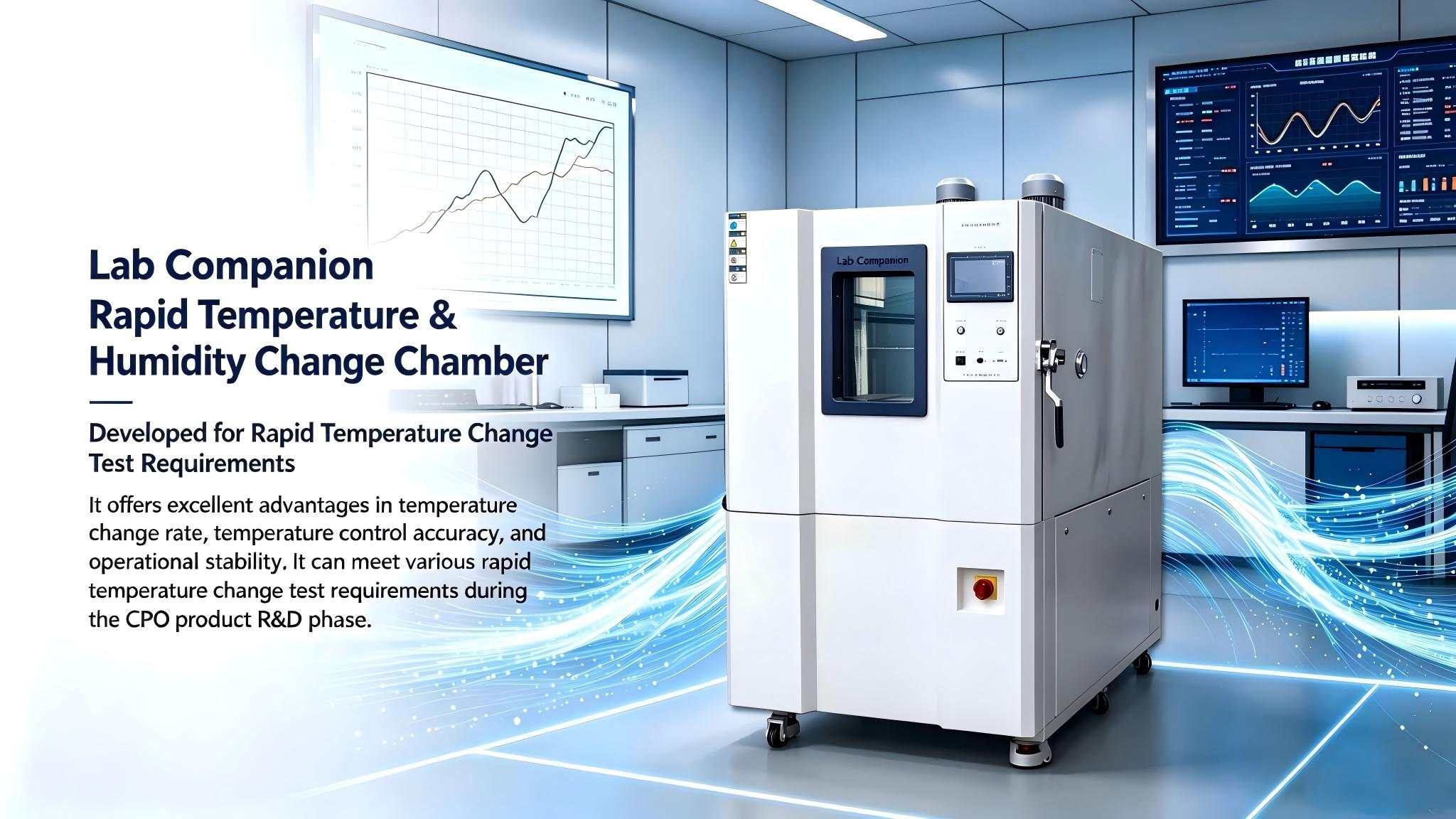
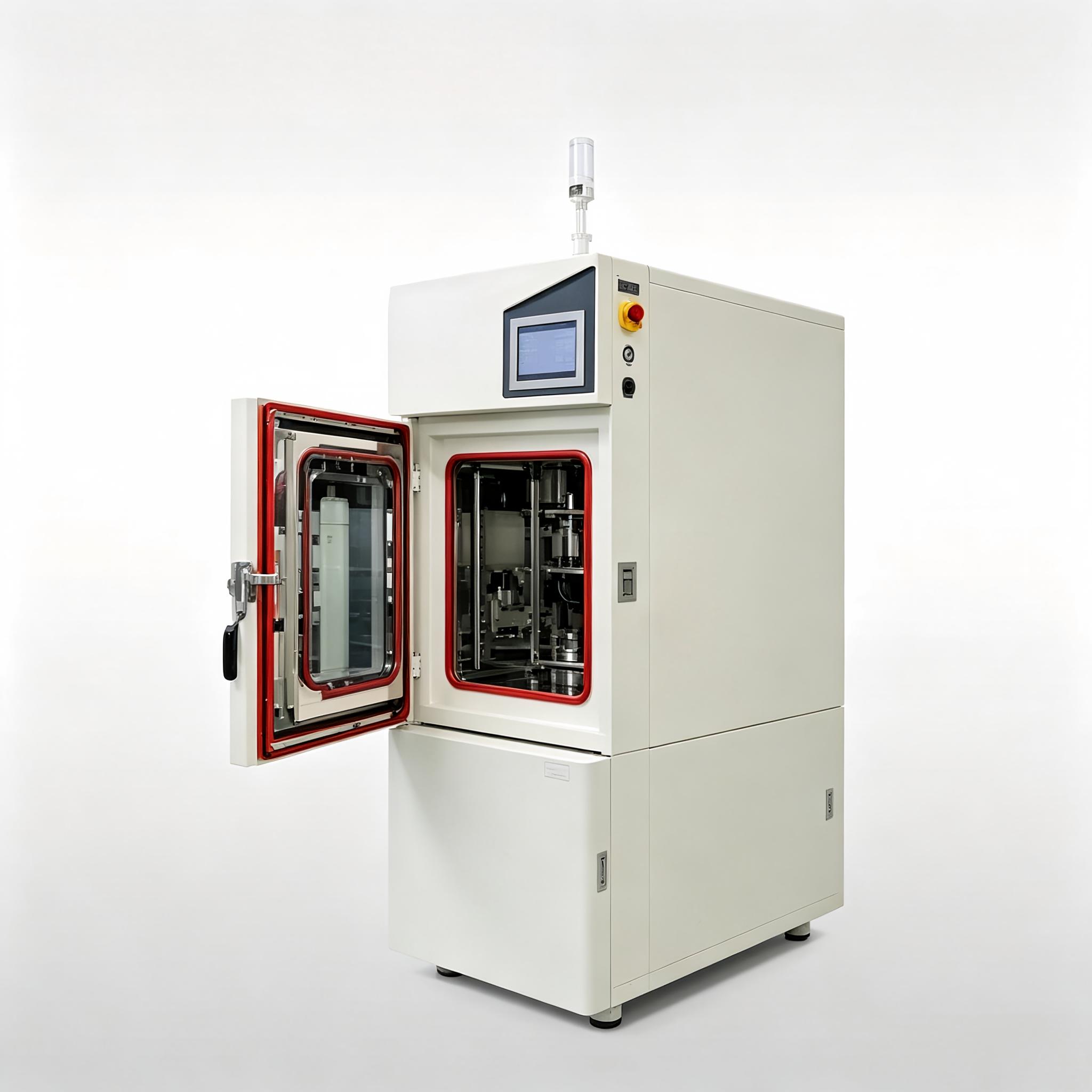
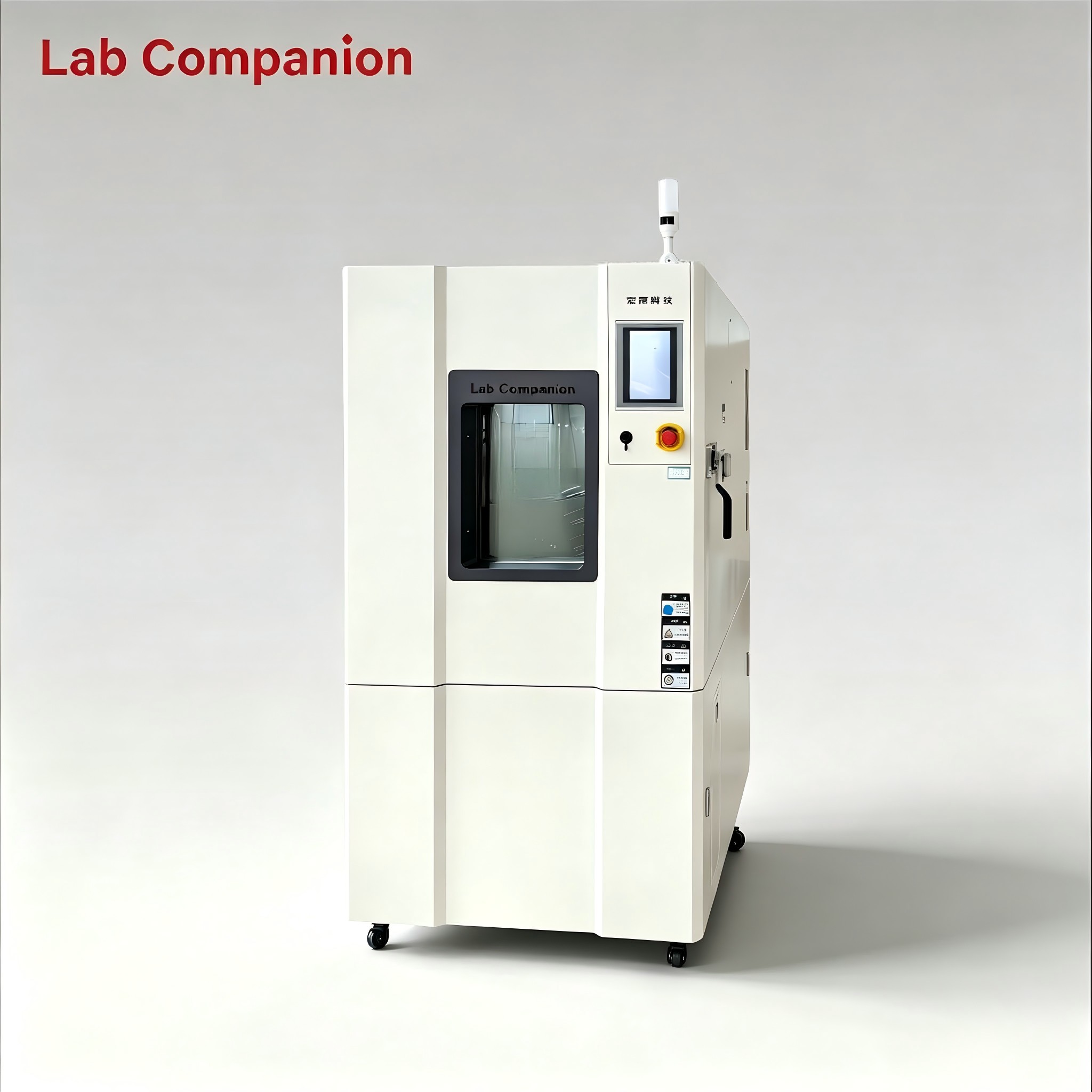
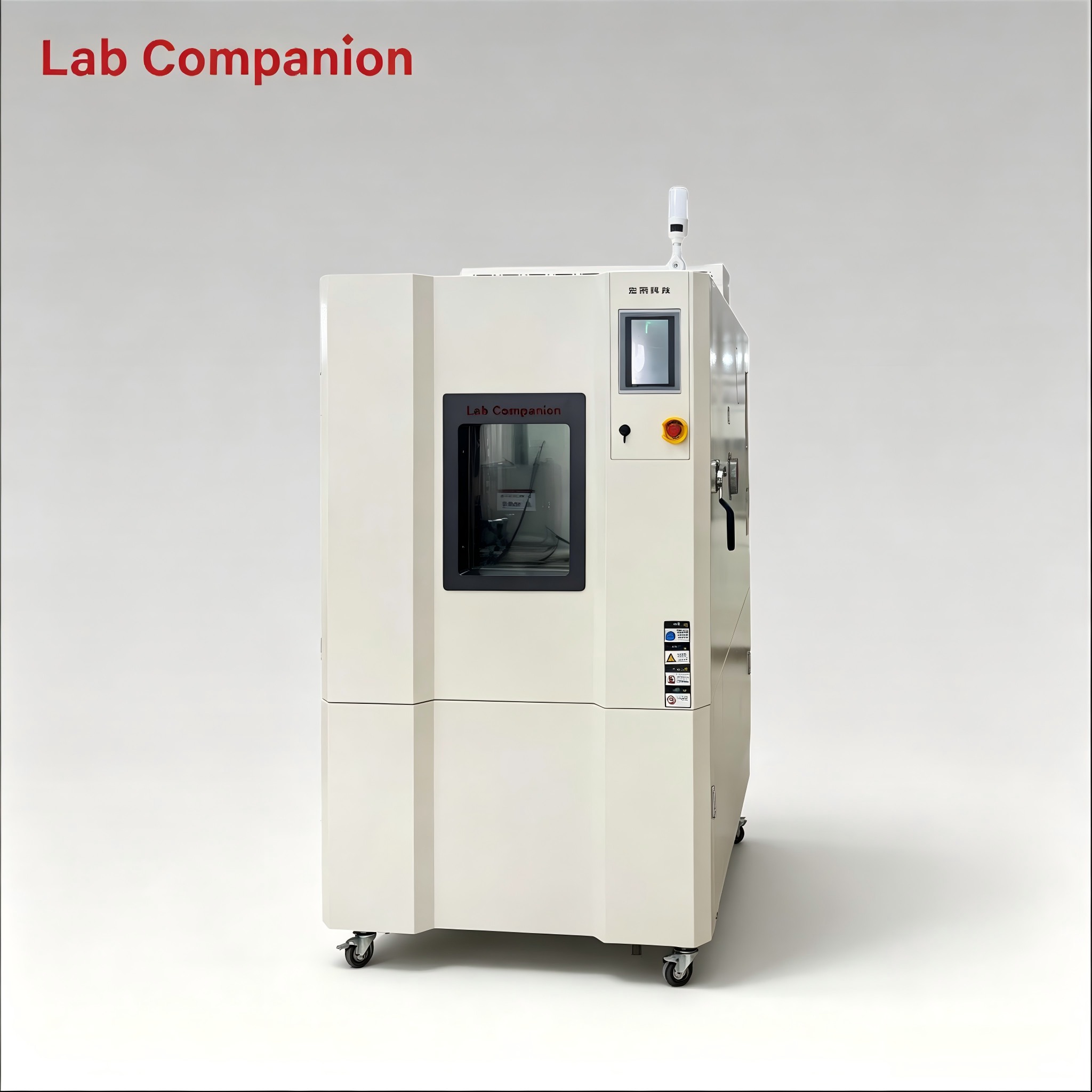
Lab Companion temperature cycling chambers cover -70℃ ~ +150℃, fully satisfying AEC-Q100 Grade 2 (-40℃ to +105℃) and Grade 1 (-40℃ to +125℃) requirements with ample safety margin. The system maintains stable long-run operation at 125℃ without thermal drift.
Performance specifications: temperature fluctuation ≤ ±0.5℃, temperature uniformity ≤2.0℃, temperature deviation ±2.0℃, exceeding GB/T 5170 requirements. AEC-Q100 requires consistent thermal stress across all DUTs. Lab Companion’s ≤2.0℃ uniformity ensures all automotive storage samples experience equivalent thermal loading over 500 cycles, delivering statistically valid test results. Linear ramp rates are configurable from 5℃/min to 25℃/min to precisely replicate AEC-Q100 thermal profiles.
4.2 Long-duration Stability and Data Traceability
AEC-Q100 temperature cycling demands uninterrupted operation for 14–24 days. Lab Companion chambers use premium brand compressors and refrigeration components with multi-layer protection: over-temperature, compressor overload and phase-loss protection. Every unit undergoes a minimum 48-hour continuous run-in test before shipment to validate refrigeration and control reliability.
Traceability is mandatory for AEC-Q100 audits. The touch controller automatically records temperature curves, cycle counters, alarms and runtime logs. Data can be exported via USB as CSV or PDF files for report archiving. Complete thermal logs serve as objective evidence during certification audits and meet traceability requirements.
4.3 Calibration at Dongguan Factory & Global Service Support
Each chamber is assembled and calibrated at the Dongguan manufacturing site. Factory validation includes ramp rate verification, 9-point temperature mapping, extreme setpoint stability testing and continuous runtime validation. For automotive storage customers, pre-run validation for Grade 1 or Grade 2 profiles can be performed to confirm performance under your target test conditions. Delivery includes calibration certificates and validation reports, ready for lab system audits and AEC-Q100 on-site reviews.
Our global service network delivers installation, commissioning, periodic calibration and on-site repair. Automotive qualification schedules are tight; rapid service response minimizes downtime caused by equipment faults. Annual maintenance is recommended, including refrigeration inspection, electrical tightening, thermal field recalibration and consumable replacement to sustain accuracy for years of AEC-Q100 testing.
5. Common Issues in AEC-Q100 Qualification and Mitigation
5.1 Test Interruption and Cycle Recounting
Power outages, equipment faults or temperature alarms may halt cycling. AEC-Q100 interruption rules: if the stop occurs during temperature dwell, lasts ≤30 minutes and sample temperature remains close to setpoint, completed cycles remain valid. If interruption happens during ramp-up/ramp-down, or temperature deviates significantly, the incomplete cycle is discarded and valid counts must be re-evaluated against thermal logs.
Mitigation: deploy UPS backup for power resilience; implement scheduled preventive maintenance; review temperature profiles and chamber status daily; preserve full logs after any outage and consult certification bodies when judging cycle validity.
5.2 Temperature Non-uniformity and Sample-to-sample Variation
Poor airflow from overloading, accumulated dust or expired calibration creates uneven thermal distribution. Symptoms include large failure-rate variance across positions in one chamber and inconsistent results across batches.
Mitigation: follow sample loading guidelines and preserve airflow channels; regularly clean condensers and air ducts; perform 9-point thermal mapping every 6–12 months to maintain ≤2.0℃ uniformity; mark poor-uniformity zones and avoid placing critical qualification samples there; arrange on-site service for airflow tuning and recalibration when needed.
5.3 Non-compliant Test Reports
Auditors frequently reject incomplete reports due to missing ramp rates/dwell times, discontinuous temperature logs, unclear sample serial number traceability, superficial failure analysis or incomplete approval signatures.
Mitigation: adopt standardized AEC-Q100 report templates covering all mandatory fields; export native chamber logs to avoid manual transcription errors; maintain sample traceability linking serial numbers, baseline data, runtime logs and post-test results; document full failure analysis for all rejected units; enforce three-level sign-off (test engineer, reviewer, approver).
6. Conclusion
AEC-Q100 temperature cycling is a gatekeeper for automotive eMMC, UFS and SSD entering OEM supply chains. The difference between Grade 2 and Grade 1 defines thermal stress intensity, test duration and chamber requirements. Rigorous control across the full test lifecycle — sample preparation, in-test monitoring, post-test characterization and reporting — directly determines qualification success.
Lab Companion temperature cycling chambers deliver wide temperature range, precise thermal control, reliable long-run operation and full data traceability, fully supporting AEC-Q100 Grade 1 and Grade 2 qualification for automotive storage. Backed by factory calibration in Dongguan and worldwide after-sales support, Lab Companion provides end-to-end solutions: chamber selection, profile setup and test execution support. We help storage manufacturers complete AEC-Q100 qualification smoothly and gain access to automotive supply chains.
Read More




 Get A Quote


 IPv6 network supported