Amid intensifying competition in global high-end manufacturing, environmental reliability testing equipment serves as core equipment ensuring product quality and performance stability. Its technological R&D capability and manufacturing precision directly determine the core competitiveness and global industrial chain voice of Made-in-China products. With over 20 years of technological accumulation, Lab Companion (Guangdong Hongzhan Technology) has forged a dual international development path that equally emphasizes "bringing in" and "going global" — by introducing century-old French temperature control technology to achieve performance leaps, and relying on independent innovation and compliance with international standards to expand its products to the global market, becoming a typical example of a national brand in China’s environmental testing equipment industry stepping onto the world stage.
1. Bringing In: Partnering with France’s Froilabo, Century-Old Technology Empowers Domestic Upgrading
On May 4, 2020, marking the 15th anniversary of Lab Companion’s establishment, a strategically significant international cooperation officially took effect: Lab Companion signed a strategic cooperation agreement with Froilabo, a century-old French temperature control enterprise. The two parties launched all-round cooperation in technology introduction, product R&D and market promotion of the Dragon Series Thermal Shock System and Thermal Flow Instrument in China’s industrial sector.
1.1 In-depth Introduction of Century-Old Technical Accumulation
Founded in 1918 and headquartered in Lyon, France, Froilabo is a long-term supplier to the French aerospace industry, boasting over a century of technical expertise in temperature control product manufacturing. Renowned for exceptional temperature control performance and stable quality, Froilabo developed a wide range of temperature control equipment including thermal shock systems and thermal flow instruments as early as 1979. The core of this cooperation — the Dragon Series Thermal Shock System, manufactured in France to European standards, features an ultra-wide temperature control range of -80℃ to 250℃, ultra-fast response speed (heating from -55℃ to +125℃ in only 7 seconds and cooling in just 14 seconds), and a high temperature control accuracy of ±0.1℃.
1.2 Technological Integration Drives Performance Breakthroughs
By integrating Froilabo’s temperature control technology, Lab Companion achieved a major breakthrough based on its original wide temperature range of -65℃ to +150℃, raising temperature control accuracy to an ultra-high level of ±0.3℃. The products fully comply with more than 20 domestic and international testing standards, including GJB 150A, IEC 60068, and MIL-STD-810. Beyond parameter improvements, technological integration has also brought a qualitative leap in product intelligence: equipped with an AI intelligent control system, Lab Companion thermal shock chambers add a 7-day advance fault warning function. Paired with a Siemens PLC and 10-inch touch screen, operational efficiency is improved by 40%.
As emphasized by both partners, this strategic alliance aims to deliver high-performance thermal shock systems to Chinese users, providing reliable testing support for semiconductors, design companies, aerospace, optical communications, universities and research institutes. The introduction of the Dragon Series has enabled Lab Companion to realize 45-second fast scenario parameter switching, breaking the monopoly of imported technologies in the high-end testing equipment sector.
2. Going Global: International Standard Compliance and Global Market Expansion for Made-in-China Products
"Bringing in" lays the foundation for better "going global". While absorbing advanced international technologies, Lab Companion continues to strengthen independent R&D capabilities, bringing "Made-in-China" to the global arena.
2.1 International Certifications: The Passport to Global Markets
In international trade, product certifications serve as the key to entering overseas markets. Lab Companion thermal shock chambers have fully obtained EU CE certification, complying with authoritative international and domestic standards such as IEC 60068-2-14, MIL-STD-883, GB/T 2423.22, and GJB 150.3A, with test data mutually recognized by laboratories worldwide. The company strictly implements four international management systems: ISO 9001 Quality Management System, ISO 14001 Environmental Management System, ISO 45001 Occupational Health and Safety Management System, and ISO 27001 Information Security Management System, ensuring product quality and management standards align with international benchmarks.
For basic general standards, Lab Companion thermal shock chambers fully comply with the new national standard GB/T 2423.22-2025 and international standard IEC 60068-2-14, with globally mutually recognized test data. For segmented industries, the R&D team deeply interprets core standards including military GJB 150.5A, automotive ISO 16750-4, semiconductor JEDEC 22-A104, and aerospace MIL-STD-883H, integrating strict parameter requirements into the initial product design.
2.2 Global Service Network: Service Coverage from China to the World
To support overseas market expansion, Lab Companion has set up service centers in 16 domestic cities and overseas in Singapore, France, Russia and other regions, establishing a rapid service mechanism of "2-hour response, 3-day on-site service". The company operates three R&D and manufacturing bases in Dongguan, Kunshan and Chongqing, with an annual production capacity of 15,000 units, and sales and maintenance service centers in Beijing, Shanghai, Wuhan, Chengdu, Chongqing, Xi’an and Hong Kong.
In terms of overseas market layout, Lab Companion’s products have been exported to many countries and regions in Southeast Asia, Europe and beyond. In 2026, Lab Companion’s constant temperature and humidity test chambers were successfully exported to Everich Plastics Co., Ltd. in Thailand, marking a continuous increase in international market recognition for its products. Through cooperation with Froilabo, Lab Companion not only introduced the Dragon Series to China, but also accelerated its internationalization process by leveraging Froilabo’s global channel resources.
2.3 Serving Global Leading Customers: International Recognition of a Chinese Brand
Lab Companion’s products have served more than 12,000 customers worldwide, covering leading domestic and international enterprises such as Huawei, BYD, CATL and State Grid Corporation of China. In scientific research, the company provides equipment support for top universities including Tsinghua University, Peking University, Hong Kong University of Science and Technology, Nanjing University of Aeronautics and Astronautics, and maintains close cooperation with the National Institute of Metrology, China, Chinese Academy of Sciences and other research institutions. Recognition from these high-threshold customers is the best proof of Lab Companion’s product quality and international competitiveness.
3. Future Outlook: Building a Globally Influential National Brand
Amid the accelerating trend of domestic substitution, Lab Companion is shifting from "technology introduction" to "technology export". Adhering to the core philosophy of "breaking through with innovation, establishing a reputation with quality, and winning the market with service", the company takes as its mission "building benchmark testing equipment for the industry and promoting the internationalization of domestic high-end testing equipment".
In the future, Lab Companion will continue to increase R&D investment in extreme scenario testing technology, breaking through core technologies such as -273℃ ultra-low temperature testing and 150MPa ultra-high pressure explosion protection, and expanding application scenarios in emerging fields such as deep space exploration and nuclear fusion. Meanwhile, the company will deepen the application of AI technology, develop intelligent fault prediction and remote operation and maintenance systems, reduce equipment energy consumption by more than 30%, promote environmentally friendly refrigerants and zero-carbon refrigeration technology, and build a green testing ecosystem.
In terms of global layout, Lab Companion plans to expand its overseas service network, set up regional headquarters in Southeast Asia, Europe and North America, continuously increase international market share, and build a globally influential national brand IP. From "bringing in" global advanced technologies to "going global" to demonstrate the strength of Made-in-China, Lab Companion embraces global resources with an open and inclusive attitude and steps onto the world stage with independent innovation capabilities, injecting core impetus into the localization and internationalization of high-end reliability testing equipment for China’s manufacturing industry.
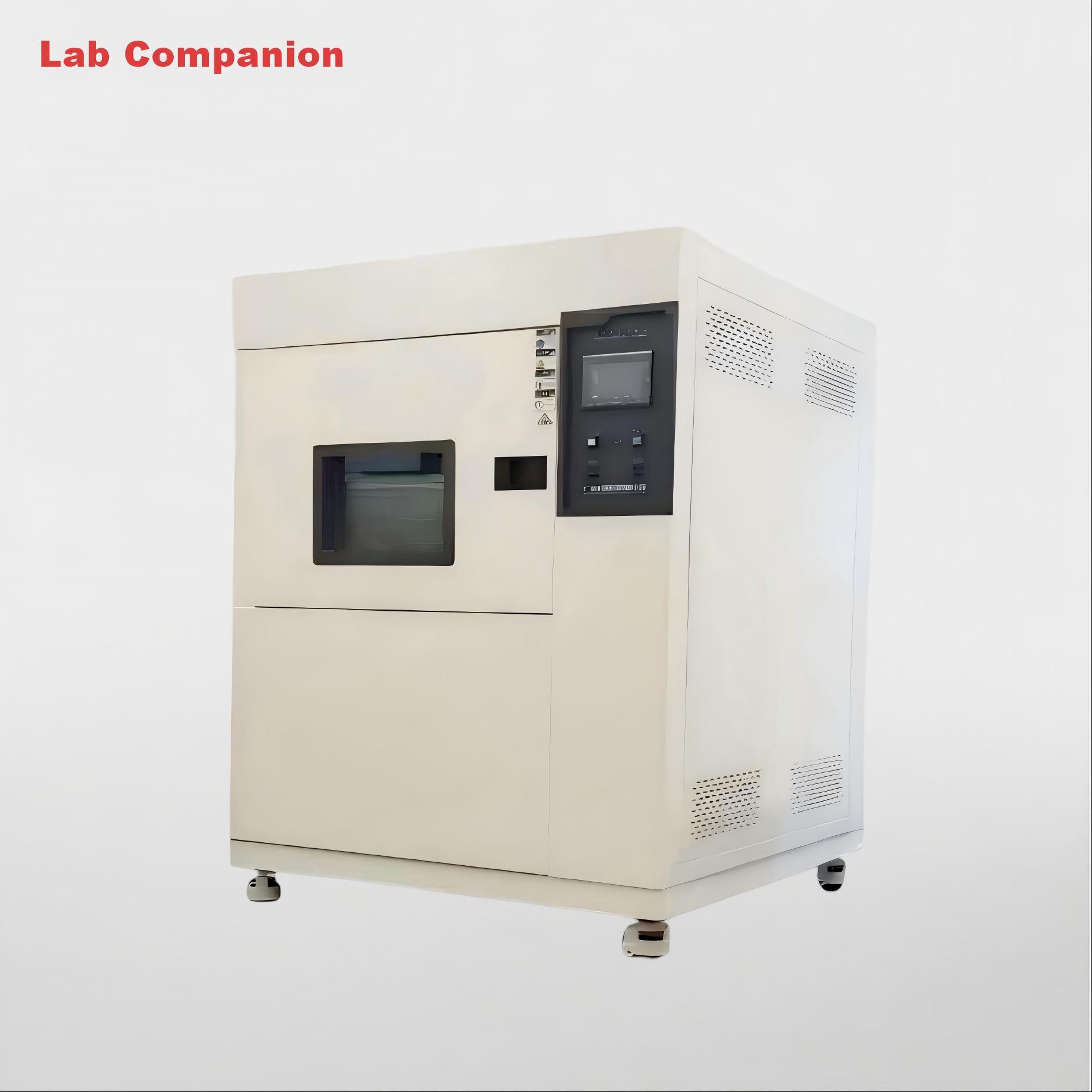
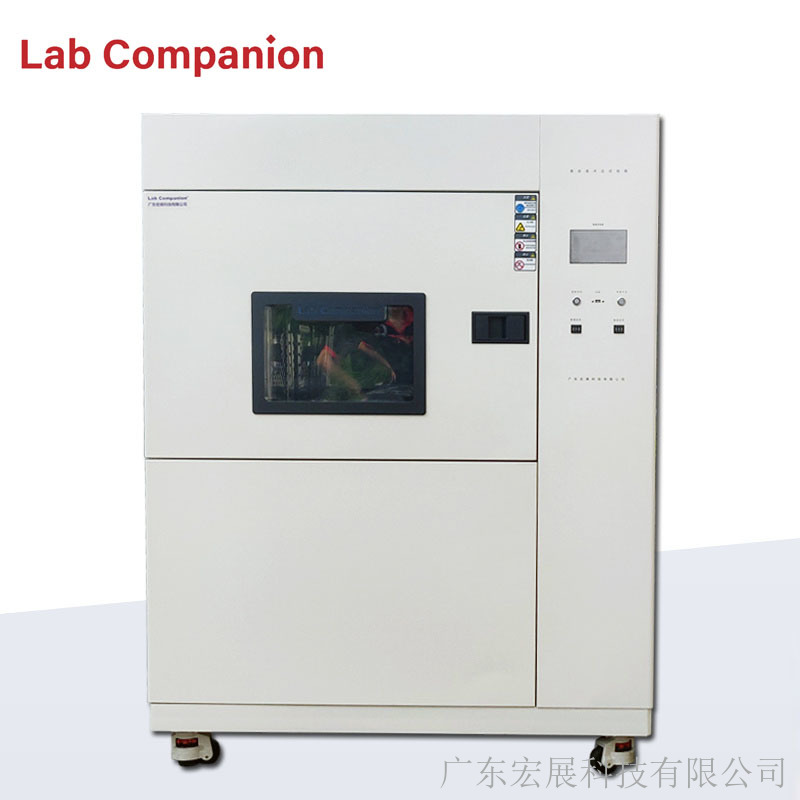
The stable operation of Guangdong LabCompanion TS2 (two-chamber type) and TS3 (three-chamber type) series thermal shock test chambers relies on standardized maintenance. Combining the structural commonalities of the two equipment series and the differences such as the exclusive damper assembly of TS3, this document sorts out the core maintenance essentials and provides practical operation guidelines.
I. Daily Maintenance: Mandatory Items After Daily/Each Test
Applicable to both series, the core of daily maintenance is to identify basic hazards, which shall be completed after daily/each test as follows:
1. Cleaning and Environment Arrangement: Cut off the power after the test; wait for the chamber to return to normal temperature, then wipe the inner tank (SUS304 material) and outer shell with a dry soft cloth; ensure the ventilation and heat dissipation ports are unobstructed, reserve a heat dissipation space of ≥30cm around the equipment, and avoid debris accumulation.
2. Basic Status Check: Inspect that the door sealing gasket is intact and undamaged; confirm that the sample rack/basket (TS2) and test rack (TS3) are free of looseness and deformation, and the pneumatic moving mechanism of TS2 operates smoothly; check that the line connections are firm and undamaged, and the refrigeration pipeline has no abnormal frosting or leakage traces.
3. Preliminary Consumable Inspection: Check if the air filter is clogged, and promptly blow it clean with compressed air or rinse it with clean water and dry it; additionally clean the observation window glass for TS3 to ensure clear visibility.
II. Regular Maintenance: Cycle-Based Precise Maintenance (Summary in Table)
Maintenance Cycle
Core Items
Differences Between TS2/TS3
Weekly
1. Clean the air filter (replace every 3 months); 2. Clean the heat sink of the refrigeration condenser; 3. Check the operation status of core mechanisms
TS2: Check that the air pressure of the pneumatic moving mechanism is stable without abnormal noise; TS3: Check that the damper assembly switches smoothly and the gasket does not fall off
Monthly
1. Check that the terminals of the heating element are firm and free of oxidation; 2. Test over-temperature, overload, leakage and other protection functions; 3. Check the status of transmission/ventilation components
TS2: Check the lubrication of the basket guide rail; apply high-temperature grease if stuck; TS3: Check that the circulating fan has no abnormal noise and clean the dust on the blades
Quarterly
1. Professionally inspect the refrigeration system and test the refrigerant pressure; 2. Check the lubricating oil level of the compressor; 3. Calibrate the temperature control accuracy; 4. Inspect the sealing components
TS3: Disassemble and inspect the gasket of the damper assembly; replace it promptly if aged or worn
III. Special Maintenance for Core Components
1. Refrigeration System Maintenance (Common to TS2 and TS3): Avoid frequent start-stop of the refrigeration system (wait for ≥5 minutes after shutdown before restarting); run for 30 minutes every month during long-term shutdown to prevent compressor seizure; regularly check pipeline joints for leakage with soapy water, and prohibit starting the compressor without sufficient refrigerant.
2. Control System Maintenance (Common to TS2 and TS3): Clean the control panel to prevent liquid ingress; check that the PLC/sensor wiring is firm and clean the probe; back up test programs regularly, and verify the connection of remote communication lines (if any).
3. Exclusive Mechanism Maintenance (Differences): TS2: Maintain the pneumatic moving mechanism, check that the cylinder/solenoid valve has no air leakage, and inspect the drive motor windings annually for insulation; TS3: Check the air pressure of the damper drive cylinder every six months, clean the guide rail and apply lubricating grease, and replace aged seals.
IV. Fault Prevention and Emergency Handling
1. Prevention Points: Do not overload the equipment; samples shall be dry and non-corrosive; avoid long-term continuous operation at extreme temperatures; cut off the power, prevent dust and keep the environment dry and ventilated during long-term shutdown.
2. Emergency Principles: Immediately press the emergency stop button and cut off the power in case of abnormality; do not force restart; simply check the filter/condenser/sealing gasket; contact the official LabCompanion after-sales service if the problem cannot be solved, and prohibit non-professional personnel from disassembling core components.
V. Maintenance Records and Notes
Establish a maintenance ledger to record the date, items, problems and handling results; must cut off the power to prevent electric shock during maintenance; use compliant consumables, and contact the official for inspection and calibration annually to ensure compliance with national and military standards.
Summary: The core of maintenance for both equipment is "daily hazard prevention, regular core maintenance, and exclusive differentiation". Standardized operation can ensure stable operation, accurate testing, extend service life and reduce operation and maintenance costs.




 Get A Quote


 IPv6 network supported